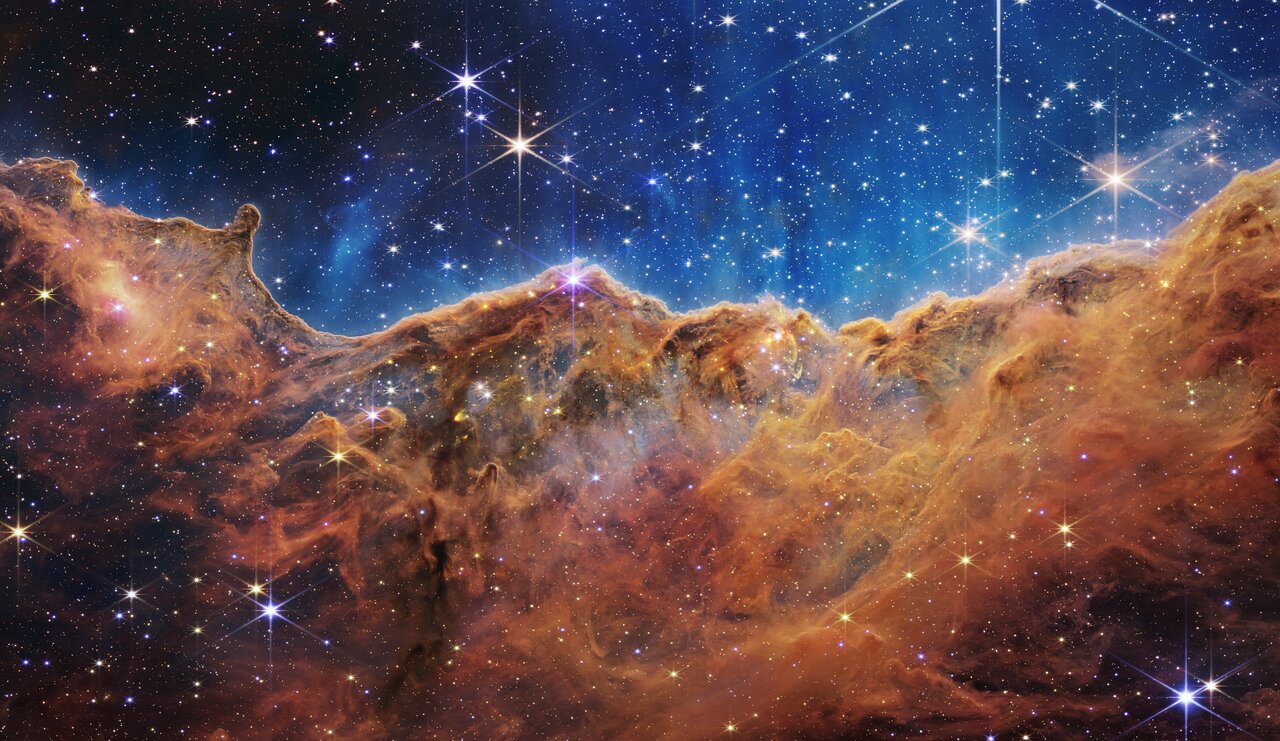
ESA announced a new Space Warps citizen-science effort using images from Euclid. Participants inspect candidate systems for strong gravitational lensing: arcs, repeated images, and rings produced when intervening mass deflects light from a background object.
Why it matters
The lensing pattern depends on the distribution of mass, including matter that does not emit detectable light. Carefully modelled lenses can therefore constrain the total mass of galaxies and galaxy clusters.
People and algorithms together
The project combines automated candidate selection with visual assessment. A promising-looking arc is a candidate for further analysis, not automatically a confirmed gravitational lens.
For a physics learner, the connection is direct: general relativity predicts how gravity changes light’s path, and astronomical images provide measurements against which those predictions can be tested.
This brief summarises ESA’s announcement of 21 April 2026. Participation details and the original report are linked below.